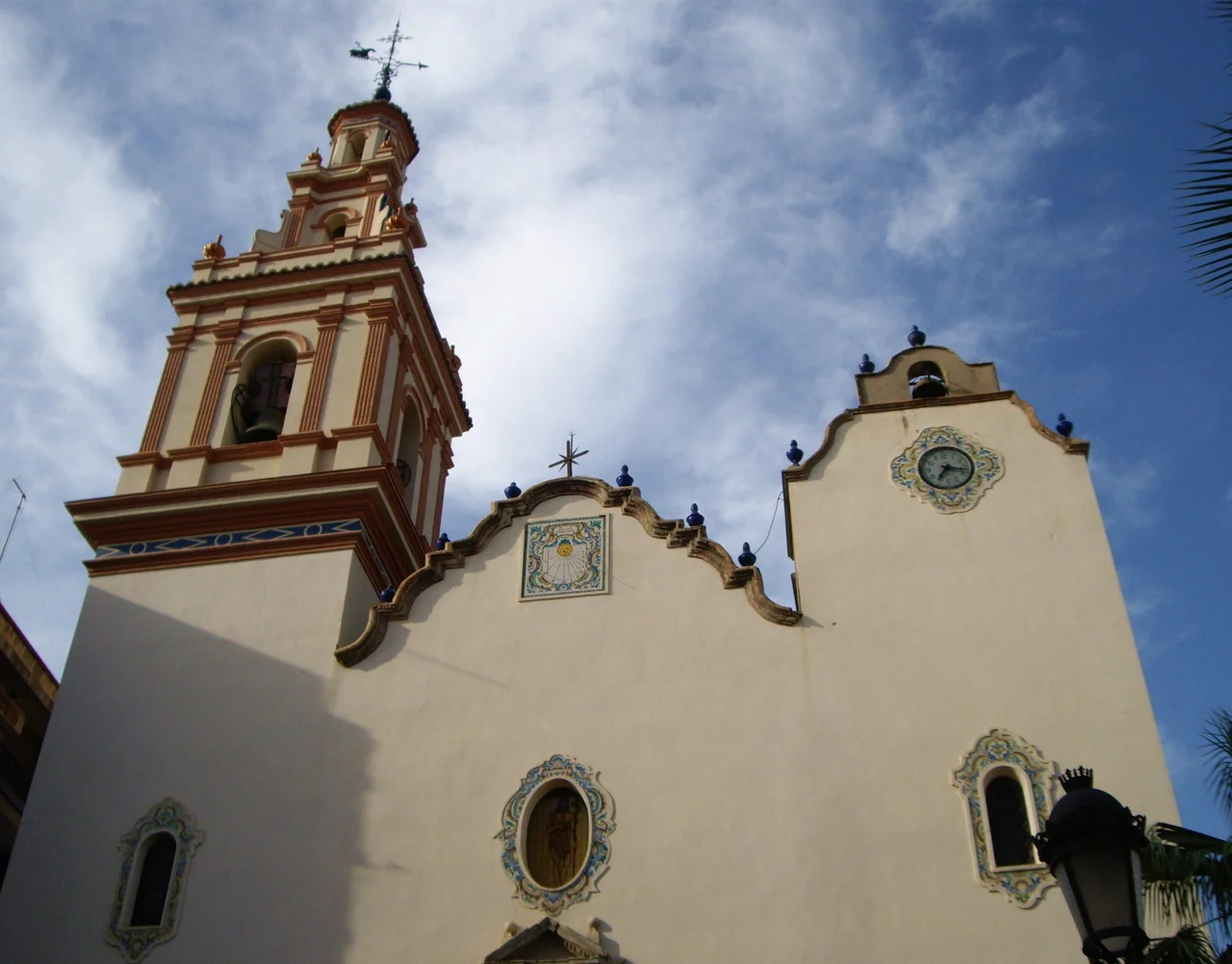

Manises
Most travellers to Valencia touch down in Manises without ever learning its name — it is simply where the airport is. But long before there were runways, this small town of some thirty thousand people was famous across a continent for something made of earth and fire: ceramics so fine, glazed in blue and shimmering gold, that they reached the tables of royal courts throughout medieval Europe. Seven centuries on, the kilns of Manises are still lit.
Earth, Fire, and Seven Centuries
People have lived on this ground since Roman times, but Manises became a town under the Arabs, who turned it into a centre for making ceramics. That craft has been practised here for at least seven hundred years, long enough to become the town's whole identity. Where other places grew around a castle or a harbour, Manises grew around its kilns. The clay of the region, the skill passed from one generation to the next, and a steady market for beautiful objects combined to make a modest inland town into one of the great pottery centres of the Mediterranean world.
Opus Aureum: The Golden Work
The secret was lustre. Borrowing a technique that had travelled from the Islamic world, Manises potters learned to fire their glazes so that a thin film of metal settled into the surface, catching the light like beaten gold — the golden colour coming, we now know, from vanishingly small particles of silver and copper suspended in the glaze. Painted in cobalt blue and finished with that metallic sheen, the wares were unlike anything else on European tables. The earliest written references, from 1326, already call it opus aureum: golden work. It was pottery that behaved like treasure.
Sought by Popes and Princes
The fame spread astonishingly far. In 1383 the Valencian friar Francesc Eiximenis wrote that the golden work of Manises had so enchanted the world that the pope, the cardinals, and the princes of Christendom all sought it out. By the fifteenth century, Manises was the leading producer of gilded earthenware in Europe. Its plates and bowls travelled the trade routes as luxury goods: between 1393 and 1407 the great Datini merchant company was shipping Manises lustreware to northern Italy, much of it from the workshop of Asmet Zuleima, a Mudéjar master craftsman. A pot thrown by a Muslim potter in a small Valencian town could end up gracing a cardinal's sideboard in Florence.
The Craft That Survived the Conquest
That a Muslim master like Zuleima was still shaping the town's reputation a century and a half after the Christian conquest is no accident. When King James I of Aragon took the region in the 1230s, reaching Manises in 1237, he allowed the Muslim residents to remain — and, crucially, to train the Christian newcomers in the craft. Where conquests so often erased what came before, here the pottery tradition was deliberately preserved and handed across the religious divide. The skill mattered more than the faith of the hands that held it, and Manises kept making its golden ware straight through the change of rulers.
Where Others' Kilns Went Cold
In many nearby towns the potteries eventually fell silent. Manises never did. Today it is Spain's largest ceramics-producing centre, with more than a hundred workshops and factories inside the town and another fifty in the villages around it. A visitor can still buy handmade pieces from studios clustered near the metro station, on streets like Carrer del Maestre Guillem and Carrer Major. A former ceramics factory, the handsome Edificio El Arte, now houses the tourist office, and the old parish church of Sant Joan Baptista anchors the centre. The wares have changed with the centuries — from lustre plates for princes to tiles, tableware and decorative pieces for anyone with a few euros — but the essential act endures. Few towns can claim seven unbroken centuries of a single craft; fewer still are best known to the modern traveller as the place a runway happens to sit. Beneath the daily roar of the airliners overhead, the town keeps doing what it has always done: turning clay and fire into things worth keeping.
From the Air
Manises sits just west of Valencia at about 39.492°N, 0.459°W, and it is unmistakable from the air for one reason: Valencia Airport (Manises, ICAO LEVC) lies right beside the town — in fact closer to Manises than to Valencia itself. Land at LEVC and you have arrived in the ceramics town. Pick out the parish church of Sant Joan Baptista in the old centre and the former ceramics factory known as the Edificio El Arte, now the tourist office. Valencia's old city and its cathedral tower, El Miguelete, lie about 9 km east. Alicante–Elche (ICAO LEAL) is roughly 140 km south. The coastal plain gives good visibility year-round, with light summer haze possible.
Nearby Stories
- Serra Calderona 3 km away
- Requena 4.9 km away
- Battle of Lauron 9 km away
- Castle of Ayora 16 km away
- Festival Internacional de Benicàssim 36 km away
- Hēmeroskopeion 41 km away
- Rincón de Ademuz 44 km away
- Benicàssim 66 km away